Your safety comes first—every mile, every call, every roadside stop. Whether you’re hauling cross-country or running regional, here’s what every driver should know to stay safe on the shoulder and beyond.
Why the Shoulder Is the Most Dangerous Place on the Highway
When a truck stops on the shoulder, the driver and the vehicle instantly become part of the traffic flow. Even with hazard lights on, visibility and space are limited. According to FMCSA and NATSO, most roadside fatalities occur on the shoulder—not the lane—making situational awareness critical.
Key facts to remember:
- Large trucks require more space to maneuver and stop—so other motorists may misjudge your position.
- Low light, rain, and snow reduce visibility for both you and approaching traffic.
- Roadside service technicians face equal risk when assisting—every minute saved in exposure time counts.
If you can safely reach an exit, always do so. The safest shoulder is the one that isn’t used.
Step-by-Step Safety Checklist
If you must stop on the roadside:
- Signal early and slow down well before pulling off.
- Move to the safest possible spot—exit ramp > wide shoulder > behind guardrail.
- Turn on hazard lights immediately.
- Deploy reflective triangles or warning devices (per FMCSA 392.22: within 10 minutes, one 10 feet behind, one 100 feet behind, one 100 feet ahead).
- Stay in the cab unless it’s safer outside. If exiting, wear high-visibility gear and stand behind barriers.
- Call for assistance—provide your mile marker, direction of travel, nearest exit, and truck number.
- Remain alert while waiting. Even parked, your surroundings can change fast.
- Document the scene only if safe to do so (photos of placement, damage, or hazards).
Save this number: 888-595-BOSS (24/7/365 Emergency Roadside)
Rules and Regulations Every Driver Should Know
FMCSA & DOT Compliance Basics
- You are responsible for your vehicle’s safe operation under federal law.
- Roadside inspection reports must be turned in within 24 hours of receipt.
- Carriers must retain reports for 12 months.
- Follow Hours-of-Service rules (11-hour max drive after 10 hours off duty).
- Obey all state “Move Over” laws—other motorists must slow down, but your awareness keeps everyone safer.
References:
- FMCSA Safety Planner
- NATSO Roadside Safety Technician Initiative
- TMC Recommended Practices (RP 527A – Towing & Recovery Guidelines)
Preventing Roadside Emergencies Before They Happen
Do the small things that prevent big breakdowns:
- Conduct thorough pre-trip and post-trip inspections—especially tires, air lines, and fluid leaks.
- Maintain proper tire inflation and tread depth.
- Watch for new vibrations, pulling, or air pressure drops—handle them early.
- Keep a schedule for preventive maintenance and DOT inspections.
- Avoid fatigue and distractions. Rested, alert drivers spot issues sooner.
- Plan your routes—know exit spacing and rest area locations for emergency pull-offs.
Mechanical failures cause most roadside calls. Preventive maintenance keeps you on the road—and out of harm’s way.
When Help Is on the Way
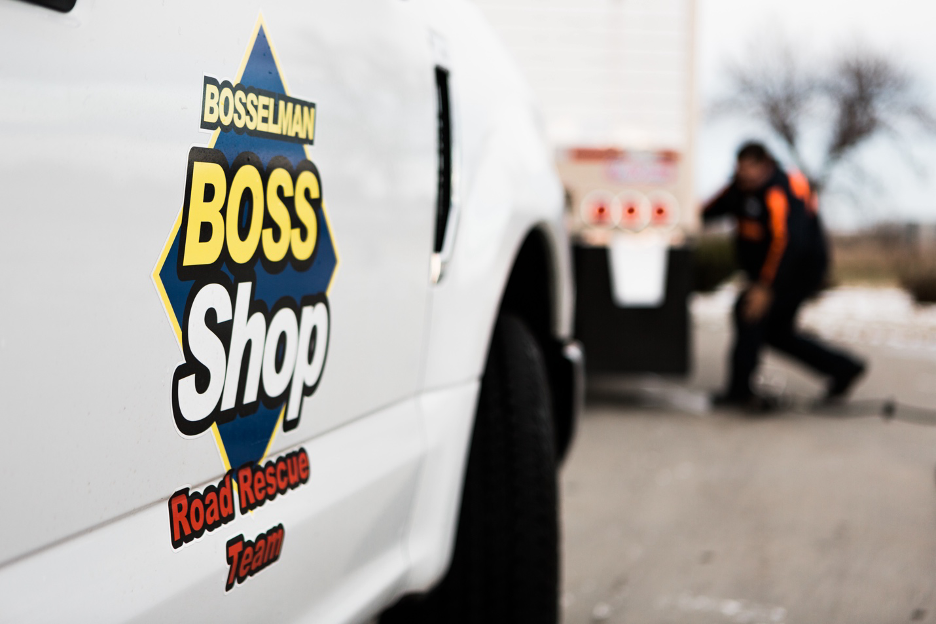
Once you’ve called dispatch, your focus shifts to staying visible and secure.
While waiting for assistance:
- Keep your hazards and warning triangles active until the technician arrives.
- Share accurate location details (exit, direction, mile marker, truck ID).
- Prepare helpful info: fault codes, tire sizes, make/model, symptoms.
- Let the technician handle all roadside exposure—they’re trained and equipped with high-visibility PPE per NATSO’s Safety Initiative.
Boss Truck Shops Commitment to Safety
At Boss Truck Shops, safety isn’t a department—it’s our culture.
- 24/7 Call Center staffed by real people who prioritize your location and safety.
- Certified technicians trained in both tire and mechanical repairs.
- Nationwide network to get you off the shoulder and back on the road faster.
- One call, do it all approach: mechanical, tires, and beyond.
Quick Reference: Roadside Safety Card
Before you stop:
- Signal and slow down
- Pull off safely
- Turn on hazards
- Set warning triangles
- Stay behind guardrail
- Call 888-595-BOSS
- Stay alert and document safely
The freight matters—but not more than the person behind the wheel. Every smart decision—every safe stop, every clear call, every hazard triangle—protects not just you, but everyone on the road. Stay alert, think ahead, and remember: safety always comes first.
